

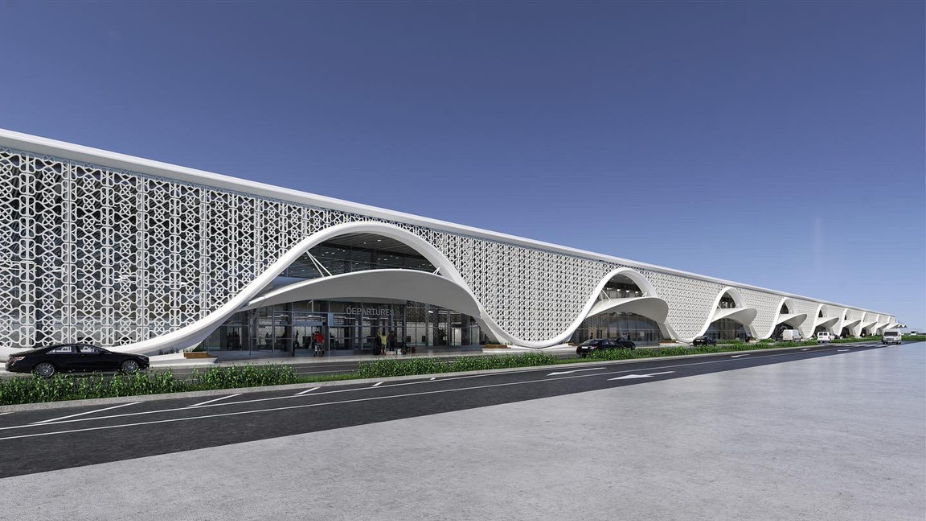
For the Maldives, connectivity isn’t a convenience—it’s a condition of national life. An atoll state stretched across open water cannot grow without reliable gateways, and it cannot compete globally without making arrival feel effortless. That’s why the expansion of Velana International Airport in 2025 mattered far beyond an infrastructure headline: it reshaped how the country meets the world.
When the new passenger terminal began welcoming passengers on July 26, 2025, it marked the most visible milestone in a long, high-stakes transformation aimed at modernizing the Maldives’ primary aviation hub.
A terminal that signals scale
The new terminal is designed to handle 7.5 million passengers annually and spans 72,000 square metres, bringing modern passenger processing and expanded facilities into an airport that has long carried demand beyond its older footprint.
This isn’t just about having a larger building. In travel, perception begins the moment you step off the aircraft. For a destination whose global reputation is built on high-end experience, the airport is the first chapter of the story. A smoother check-in flow, clearer wayfinding, and reduced congestion translate into something that’s hard to measure but easy to feel: confidence.
Phased transition, real-world complexity
Large terminals don’t “switch on” overnight. Velana’s expansion rolled out in phases, with airlines gradually moving operations over time. Reports around the transition described how initial operations began with select carriers, with a wider shift planned for the months that followed.
Phased openings are often misunderstood as delays, but they are frequently a safety and systems decision: airport operations require audits, airline-specific readiness, and coordinated ground handling. In a hub where peak-season demand can arrive in waves, a measured transition can be the difference between a celebration and an operational bottleneck.
Designing for the Maldives’ unique travel mix
Velana is not a typical “city airport.” It is the gateway to a dispersed nation, where travelers often transfer onward by domestic flight or seaplane to resorts and islands across the archipelago. The new terminal reflects that reality, including dedicated infrastructure for travelers continuing their journeys—such as 24 counters for seaplane travellers, in addition to 47 check-in counters and self-service options.
This matters because Maldivian tourism is built on seamless movement: international arrival to island transfer to resort check-in—often within the same day. Every minute saved at the gateway is a minute gained for the experience the visitor actually came for.
The bigger economic logic behind an airport upgrade
An expanded gateway is ultimately an economic bet. Tourism remains a central pillar of the Maldivian economy, and capacity constraints at the primary airport create friction that can limit growth during high-demand periods.
Industry coverage of the terminal opening explicitly linked the expansion to the Maldives’ broader tourism and economic ambitions, describing it as a catalyst for arrivals and an enabler for growth targets.
But the economic story is not only about tourist numbers. Airports strengthen value in multiple directions:
- Stability for airline partnerships: Better infrastructure makes route planning easier and supports seasonal scaling.
- Higher service capacity: Faster passenger processing reduces peak-time crowding and improves operational reliability.
- Spillover into jobs and local businesses: From ground handling to logistics, from retail to transport services, airports anchor an ecosystem.
In an island economy, where distance raises costs across nearly everything, improving the country’s main entry point is one of the most direct investments in competitiveness.
Experience as strategy: why “arrival quality” matters
Airports are often discussed in engineering terms—square metres, counters, jets, and bridges. Yet the Maldives has a special incentive to think about airports as an experience design project.
A destination that markets escape and ease must deliver ease from the very start. The terminal expansion helps align the first hour in-country with the promise sold overseas: calm, efficient, modern, welcoming. Travel press coverage after the opening highlighted that the terminal began receiving passengers as part of a structured rollout and discussed airlines moving over in stages—an operational detail that also underscores the push toward a more curated arrival.
A gateway that also strengthens national resilience
There is a second layer to aviation infrastructure in the Maldives: resilience.
As climate risks intensify and global supply chains remain volatile, the nation’s ability to move people and essential goods is not just commercial—it is strategic. While the terminal itself is primarily passenger-facing, airport expansion projects typically come with broader upgrades to systems and logistics capacity that support national continuity. Public materials on Velana’s ongoing development have also referenced wider improvements tied to the airport’s role as a key infrastructure asset for the country’s economy.
In other words: when you strengthen the gateway, you strengthen the nation’s ability to function under pressure—whether that pressure comes from peak-season demand, sudden disruptions, or long-term environmental challenges.
The question now: what should this expansion unlock?
A modern terminal is not the finish line. It is leverage.
The Maldives can use this expansion to push into a smarter, more diversified tourism future—multi-generational travel, MICE, wellness, and higher-value experiences are frequently cited as growth directions, and capacity at the gateway makes that ambition more feasible.
The expansion also sets expectations: if the airport is world-class, then surrounding systems should rise to meet it—urban mobility around the capital region, passenger information systems, service professionalism, and the invisible back-end of tourism (waste management, marine protection, and energy transition) that defines whether growth is sustainable.
Expanding gateways, expanding possibilities
Velana’s 2025 expansion was, at its core, a statement: the Maldives is planning not only for the next season, but for the next era. The new terminal doesn’t just process passengers—it signals capacity, credibility, and intent.
And in a country where every arrival is also an arrival of revenue, relationships, and reputation, that signal matters.