
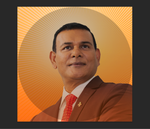

In a country where business success has long been measured in room nights and arrivals, Hassan Ziyath represents a different thesis: that the Maldives can grow by strengthening how money moves—how savings become investment, how companies raise capital, and how ordinary people participate in wealth creation.
His career arc spans public accountability and private-sector innovation. He served as Auditor General from 2014, after earlier roles including Director of Finance and Fund Management at the Maldives Pension Administration Office, and an early career start at
Can you do ooredoo niyazThought for 12s
Profile: Hussain Niyaz — The Commercial Mind Behind a Connected Maldives
In an industry where leadership is often imported, Hussain Niyaz stands out for a different reason: he rose through the technical and operational core of the company and into the C-suite at a time when telecoms in the Maldives stopped being “just mobile service” and became national infrastructure.
Appointed as Chief Commercial Officer (CCO) effective 1 January 2021, his promotion was publicly framed by the company as a milestone for local leadership within Ooredoo Maldives.
From field networks to executive strategy
Niyaz joined the company in 2005 (then operating as Wataniya Maldives) and built his career inside the telecom engine room—starting as a technician role and moving through commercial leadership over time.
Several profiles also note his earlier service background with the Maldives National Defence Force, highlighting a disciplined, systems-oriented approach that later became an advantage in large-scale network and service operations.
Why his role matters more than the title
“Commercial” in telecoms is not only about marketing. In a small, island-dispersed country, it’s about shaping how connectivity becomes everyday utility—pricing, customer experience, digital products, distribution across islands, and the business logic that sustains network expansion.
Ooredoo’s own announcement of his appointment emphasizes the breadth of his experience and frames the move as proof of leadership development from within.
The “Maldives problem” telecom leaders must solve
Running commercial strategy in the Maldives comes with built-in constraints:
- Geography costs money: serving many islands means higher logistics and rollout complexity.
- Expectations are premium: Maldivians and visitors both demand reliable service everywhere—capital, islands, and resorts.
- Digital adoption is accelerating: payments, entertainment, and online services are no longer optional add-ons.
Niyaz’s public positioning—across interviews and company-facing communications—leans into this reality: connectivity as a national platform, not a single product.
Recognition and visibility
In 2025, Niyaz received regional recognition in technology leadership coverage, reflecting the way telecom leadership is increasingly judged: not only by coverage maps, but by innovation and digital transformation.
What to watch next
For a business audience, the most meaningful question isn’t “who is the CCO?”—it’s what his era prioritizes:
- Better customer experience (speed, reliability, service design)
- Digital products with real utility (payments, entertainment, productivity)
- Stronger island-wide service consistency (closing the quality gap between regions)
In the Maldives, the strongest telecom leaders are the ones who understand that “signal” is no longer a technical metric—it’s economic participation. And Niyaz’s career, built from the ground up inside the operator itself, is a case study in how local leadership can shape national-scale systems.